How Custom Elements, Material Expertise, and Skilled Execution Shape Tailored Interiors.
Alice Chiu · November 2026
Miss Alice Designs
A truly well-designed home is about more than beautiful furnishings or carefully chosen objects. Its character comes from the relationship between architecture, materials, color, proportion, and scale, and how these elements come together to create a harmonious whole. Whether working with a Victorian or Edwardian residence, a historic estate, or a contemporary multifamily property, successful design requires an understanding of the architecture and the ability to create spaces that feel cohesive and inviting while reflecting the homeowner's tastes and lifestyle.
Achieving this level of refinement requires both creative vision and technical understanding. From preserving original details to developing custom features, selecting materials, and working with skilled trades, each stage contributes to the quality of the finished home. The true measure of good design lies not simply in the extent of customization or the furnishings selected, but in the thought and planning behind each decision and the care with which it is executed.
Architectural details and Design Development
The architectural character of a home provides the foundation for its interior design. Custom features can enhance individual spaces, establish visual connections between rooms, and create continuity throughout the home, particularly in open floor plans.
Millwork, including cabinetry, decorative moldings, and wainscoting, can preserve and highlight original details or introduce new features that add craftsmanship to the space. Fireplaces and built-ins can serve as focal points, but their success depends on more than appearance alone. Proportion, scale, and alignment must all relate to the architecture and the surrounding interior.
I begin by developing the design concept and working through the details with my in-house team. Drawings, including floor plans, furniture plans, and elevations, help establish dimensions, placement, spatial flow, and design details while showing how each component relates to the home's architecture and furnishings. This process allows us to refine the design, make adjustments, and coordinate the various aspects of the interior before fabrication begins.
When introducing new elements into an existing home, I believe it is equally important to understand and preserve its original architecture. Additions should feel naturally integrated rather than disconnected from their setting. Whether working within a traditional residence or a contemporary home, the goal is to create an interior that feels cohesive while accommodating the needs and lifestyle of the homeowner.
Material Selection and Specification
Material selection is an important part of any design project, whether it involves a full-scale renovation or decorating a space. Materials influence the look, feel, durability, and functionality of an interior. Beyond selecting products and finishes, it is important to understand their characteristics, how they are manufactured and finished, and, particularly in larger renovation projects, how they will be fabricated and installed. This knowledge helps guide decisions and ensures that each material is appropriate for its intended use.
Natural stone, for example, requires attention beyond color and finish. Slabs are available in different sizes, making it important to select the right dimensions for the space and application. Veining, pattern direction, and book matching, where two adjacent stone slabs are positioned to create a mirrored pattern, also influence the final appearance. Seam placement and edge profiles are essential details that must be clearly defined. The layout should complement the interior, particularly when stone is used for kitchen countertops and islands, backsplashes, bathroom vanities, fireplace surrounds, and other architectural features.
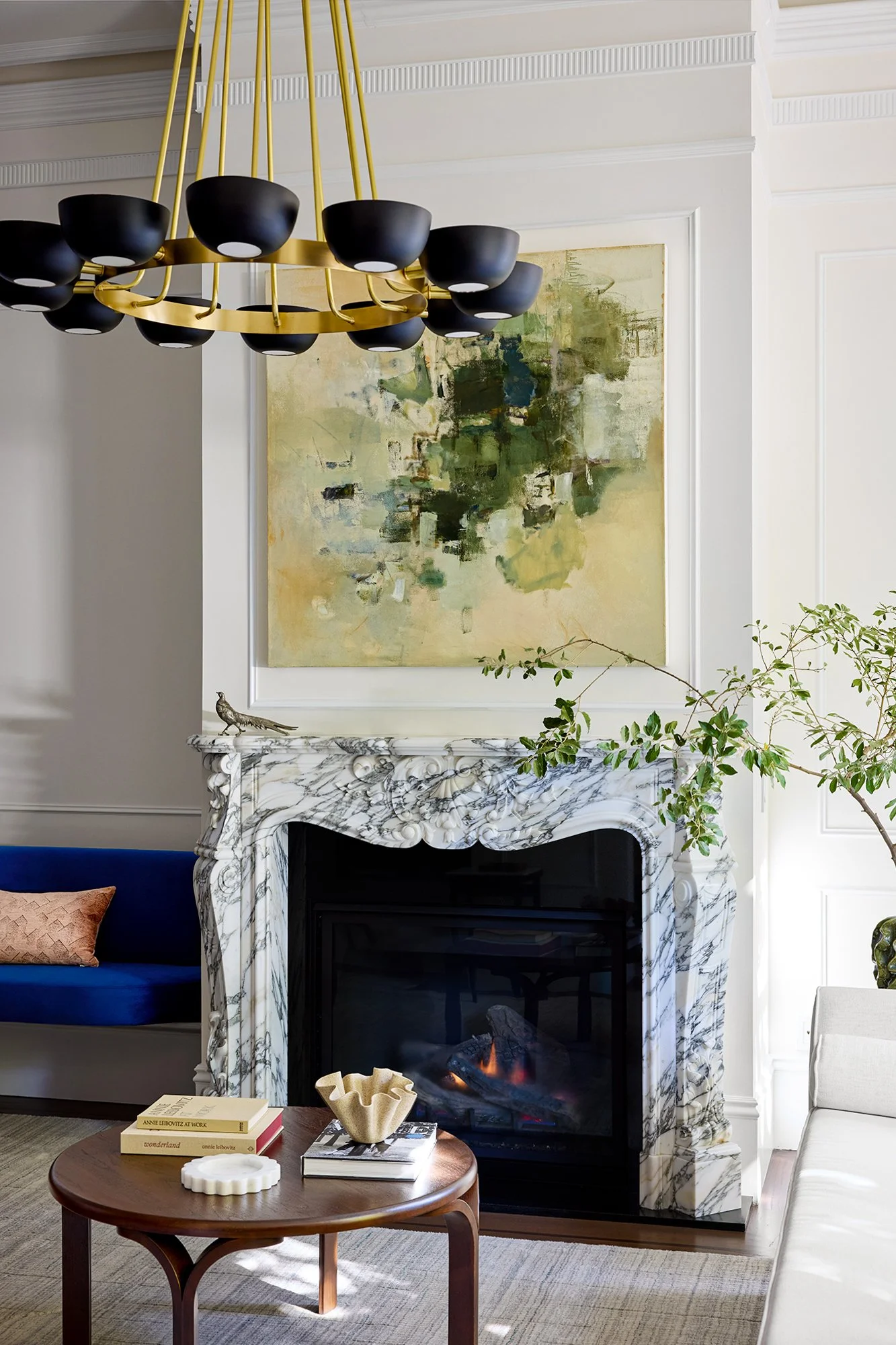
In my Pacific Heights project, the existing fireplace was positioned at an angle in the living room. The marble surround was selected and laid out to complement this orientation, allowing the veining to flow beautifully across the surface. The polished marble finish reflects light, adding depth and enhancing the organic movement of the stone. The corners were mitered to create clean, continuous transitions, while the wood mantel surround was designed to complement the marble and complete the look. This project illustrates how material selection and fabrication contribute to the overall result.
Wood finishes require a similar level of attention. Species, grain patterns, stains, and sheen can vary significantly, making physical samples and finish development valuable parts of the selection and approval process. Custom cabinetry also involves decisions about door styles, storage configurations, hardware, finishes, and fabrication requirements. These details need to be established before production begins.
The transitions between materials are equally important. Where stone meets wood, flooring changes from one material to another, or cabinetry meets a wall, the way these surfaces connect influences the appearance and quality of the installation.
Detailed specifications communicate design decisions to fabricators and installers. They clarify dimensions, materials, finishes, and other requirements, helping minimize confusion and ensure the completed work reflects the intended result.
Balancing Custom Design with Curated Selections
A well-designed home brings together custom-designed elements and carefully selected furnishings. Knowing where customization will make a meaningful difference, which items are worth retaining, and where new or unique pieces will better serve the space is another important part of the design process.
Custom features make the greatest impact when they complement the home's architecture or address the specific needs and preferences of the homeowners. These may include built-ins, cabinetry, window treatments, and furnishings designed specifically for the space.
Textiles offer opportunities to incorporate custom details, visual interest, and personality throughout the home. Fabric texture, pattern, color, and composition influence the look and feel of upholstered seating, decorative pillows, window treatments, and other soft furnishings. For window treatments, fullness and lining also play an important role in their appearance and function, including how they filter light and provide privacy.
Antique, vintage, and contemporary pieces introduce contrast and individuality. A 1920s vintage table, a sculptural chandelier, or seating upholstered in luxurious velvet can each bring a sense of sophistication to a room. Family heirlooms have a place, too - a chair passed down through generations can add a personal connection to the interior.
The combination of custom design, skilled craftsmanship, and collected pieces helps create a home that feels personal and reflects the people who live in it.
Design Coordination and Collaboration Between Trades
Whole-home renovations often involve architectural and structural work, requiring the general contractor and specialty trades to work closely together. The general contractor oversees the construction process and manages the various trades and installations to ensure the approved plans are properly carried out. Clear communication and close collaboration is essential among everyone involved in the project, as a decision in one area can have a ripple effect on several others.
As the designer, I work closely with the general contractor and specialty trades throughout construction, helping coordinate design details and address questions as they arise. Reviewing drawings, dimensions, and site conditions together helps identify potential issues and keep everyone aligned before work moves forward.
Construction can also bring unexpected findings or require changes to the approved plans. When this happens, I work with the contractor to review possible solutions and determine how they may affect the design. I then present any proposed changes to the homeowners for approval before proceeding. This ongoing collaboration helps keep the project moving while ensuring that decisions made during construction remain consistent with the design direction and the homeowners' expectations.
FROM DESIGN INTENT TO SKILLED EXECUTION
The success of a design project is ultimately measured by how beautifully the design vision comes to life. Planning and coordination establish the foundation, but the quality of the finished home depends on strong project oversight, skilled craftsmanship, and attention to detail throughout the process.
As a whole-home renovation progresses, reviewing and approving shop drawings, finish samples, and technical specifications is essential to ensuring that custom work reflects the approved design. Each item must be scheduled according to its production requirements and the sequence of construction, ensuring that materials and custom pieces are available in time for installation. This coordination helps avoid unnecessary delays and keeps the work moving forward.
Some challenges only become apparent once demolition is complete and underlying structures are exposed. Walls may not be perfectly plumb, floors may not be level, and structural elements may require revisions to the plans. Although initial measurements help establish dimensions, these discoveries can call for adjustments during construction. Working with the contractor and relevant trades to address them helps ensure that the finished work fits properly and maintains the intended design.
The distinction between a well-designed home and an exceptional one is often found in the details: thoughtfully coordinated materials and finishes, precise alignments, fitted cabinetry, seamless material transitions, and carefully executed connections between surfaces and architectural features. These elements may seem subtle on their own, but together they create a sense of refinement, cohesion, and elegance that enhances everyday living.
As the renovation nears completion, final reviews help identify and resolve any remaining inconsistencies. Skilled execution is what transforms a well-developed design into a beautifully finished home, where every detail plays a part in the overall result.
The Value of a Well-Executed Interior
Ultimately, the value of an exceptional home is found in how every element works together through intentional design decisions. The result is a space that feels cohesive, personal, and complementary to both its architecture and the people who live there.
Planning a whole-home or large scale renovation? We accept a select number of full-service projects each year. Inquire about your project to share your scope and explore working together.