Why Material Harmony Matters as Much as Color in Interior Design
How texture brings a home to life.
Alice Chiu · December 2025
Color is often the first thing people think about when updating their home or refreshing a space. It’s immediately visible and can quickly change the look and feel of a room. While color sets the tone, texture is what truly brings a space to life. Texture and color work best when they support each other rather than compete. Material harmony—the way finishes, fabrics, and surfaces interact together can be just as powerful, if not more so, than color alone.
When I think of material harmony, I think of the intentional relationship between every element in a space such as wood, metal, fabric, stone, glass, millwork, and finishes all working together as a unified whole.It’s what separates a room that feels composed from one that feels layered, cohesive, and quietly compelling. Material harmony isn’t about any single feature, but about how each surface supports and enhances the others.
Texture often goes unnoticed because it doesn’t announce itself. Color catches the eye quickly, but texture reveals itself slowly—it’s felt rather than seen. The softness of velvet, the grain of wood, the cool smoothness of marble—these are qualities that can be difficult to see in photographs, yet they shape how a space is experienced on a deeply human level.
Materials influence our emotional experience in ways color alone cannot. A plush wool rug cushions tired feet. Soft chenille pillows invite rest. Natural stone, wood, and living plants ground us and reconnect us to nature. These elements engage multiple senses like touch, sight, and sound creating tangible experiences of warmth and depth that paint alone can’t achieve. Warm oak wood carries character and depth that no painted brown wall ever could.
When clients enter a thoughtfully layered room, my hope is that they immediately feel warmth, comfort, and ease—a sense of being embraced by the space. At the same time, I want them to feel deeply connected, where quiet elegance and timeless beauty coexist without ever feeling overwhelming. The goal isn’t visual excess; it’s emotional resonance.
Miss Alice Designs
Material harmony transforms a kitchen
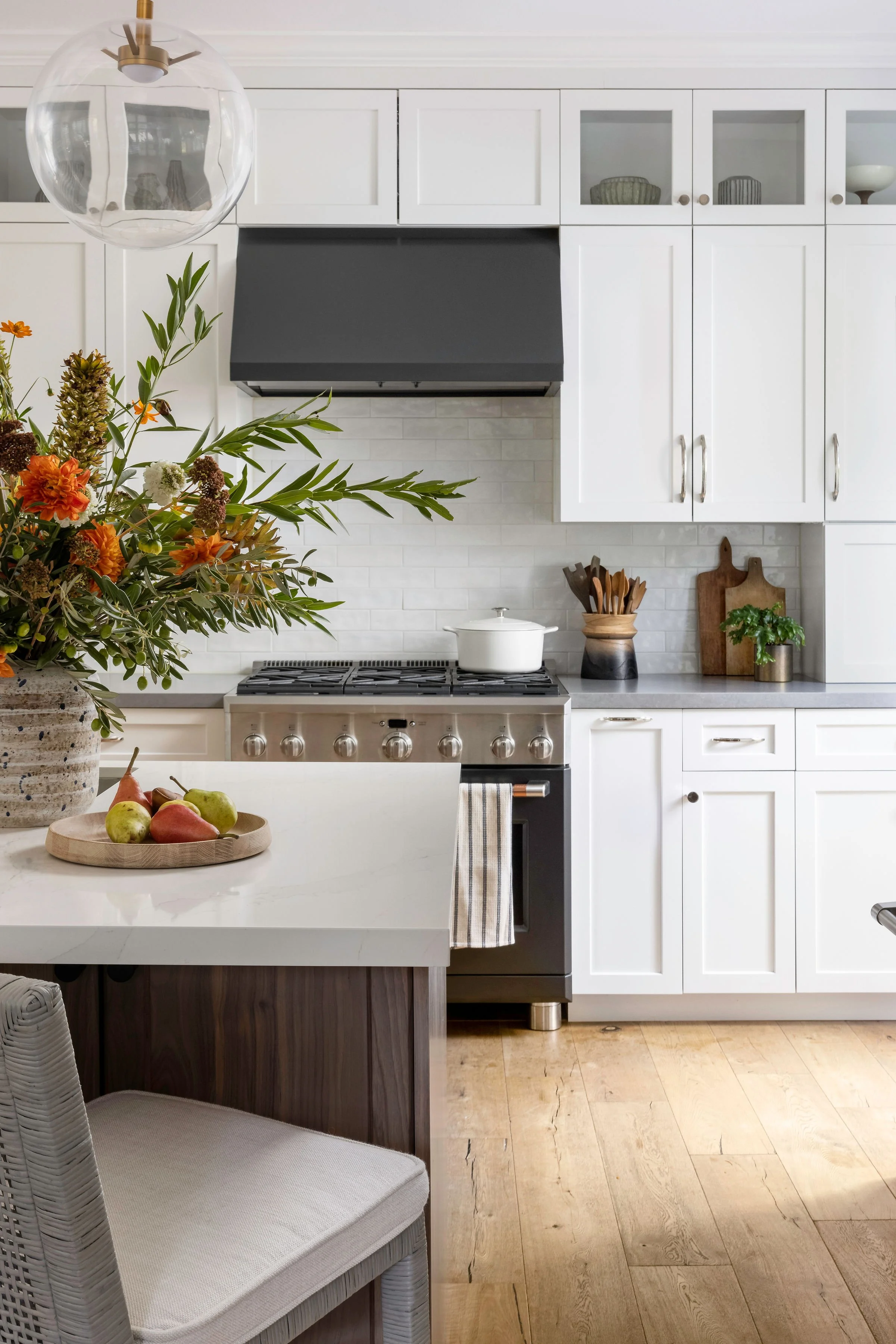
In my Danville project, the moment you step into the kitchen, you feel its warmth, coziness, and timeless elegance—achieved through carefully selected materials and layered textures. Dark and light elements contrast to draw the eye: a black hood and stove command attention as a focal point, while the walnut island and wood floors bring natural warmth. Glass pendants, stone counters, undulated tiles, and subtly patterned fabrics layer the room, creating tactile richness, dimension, and movement.
Above the breakfast table, a ridged pendant floats like a sea creature gliding across water, adding a whimsical, almost magical touch. Rattan counter stools with brass-capped legs, combined with three different metal finishes, introduce texture that invites touch, encourages connection, and envelops the room in harmony and ease. Architectural details from crown molding to built-ins guide the eye and create rhythm, reinforcing cohesion and thoughtful design throughout the space.
Design begins with thoughtful material choices
Material decisions begin early in my design process, during concept development and schematic design. They are shaped by the architecture, natural light, proportions, and how a space is meant to function and feel for its occupants. Contrast also plays a key role: smooth against rough, soft against structured. Marble resting on warm wood. A cashmere throw draped over leather.. Glass pendants shimmering against brass. These pairings create rooms that feel both lived-in and elevated, where every surface contributes to a cohesive and inviting experience.
In spaces with deeper or moodier palettes, I gravitate toward woven fabrics with subtle patterns like linen or chenille layered with wood and brass finishes. Black accents provide contrast, marble introduces timeless elegance, and wool rugs soften the space underfoot. Glass elements capture and diffuse light, keeping rooms from feeling heavy, while millwork adds character and craftsmanship. Together, these layers create a sense of calm rather than chaos.
Even in brighter, color-forward rooms, textures keep a space from feeling flat or overwhelming. By layering materials such as stone, ceramics, wood, metal, and textiles, the eye moves naturally through the room. Millwork breaks up large surfaces, adding dimension and tactile interest that keeps spaces dynamic, engaging, and inviting.
Luxury is meant to be experienced
To me, luxury isn’t about perfection or trends—it’s about experience. It’s about the connection you feel with your space. The sensation of sinking into soft pillows, running your hands along a beautifully grained wood table, or grounding your feet on a silk rug creates a sense of intimacy and authenticity. Texture brings a home to life, making it feel designed not just to be admired, but to support everyday living.
Great design is something we feel as much as we see. Materials carry a home’s identity, its values, memories, and energy. When chosen with intention, they transform a house into a sanctuary—one that reflects the people who live there and invites ease into every moment. That’s what makes a well-designed home truly exceptional.
Ready to begin your journey toward a home that reflects your lifestyle and aesthetic? Schedule a complimentary 30-minute discovery call today.
👉 Click here to book your call.