The Art of Modern Luxury in a Historic Home
How to Modernize a Historic Home Without Losing Its Character
Alice Chiu · August 2026
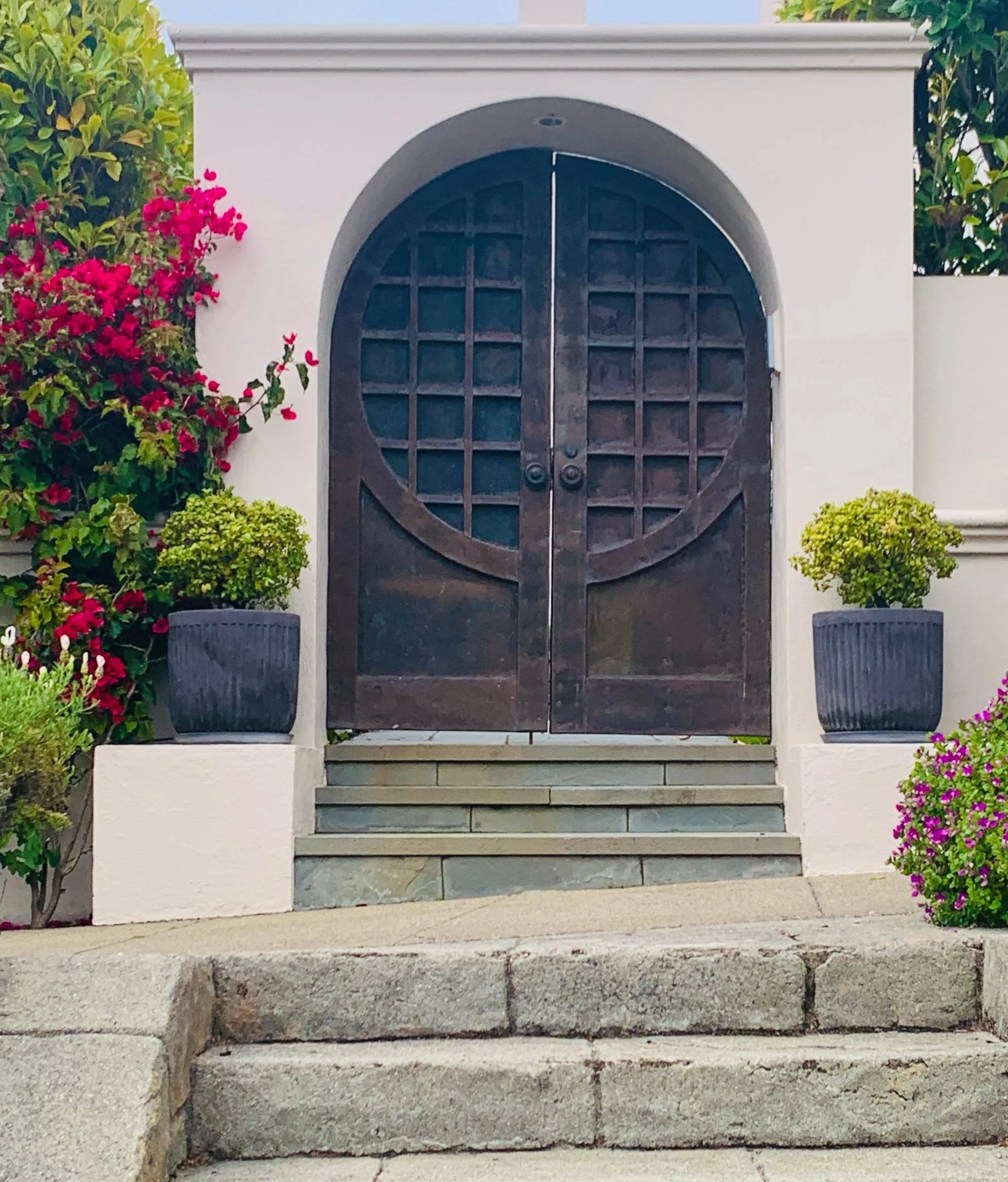
An arched metal gate in Sea Cliff that caught my eye.
One of the things that makes San Francisco so special is the character of its neighborhoods—and the remarkable homes within them.
From Mediterranean and Spanish Colonial Revival homes in Sea Cliff to Edwardian and Tudor Revival residences in Presidio Heights, and Queen Anne Victorians, Italianate Victorians, and Beaux-Arts estates in Pacific Heights, each neighborhood has its own architectural character.
Historic homes often reveal their beauty through original dark millwork, mahogany doors with bronze hardware, graceful arched windows, plaster walls, hardwood floors, stone fireplaces, and the patina of aged materials.
These details give a home a sense of history, character, and charm. They give a home its soul.
Yet living in a historic home doesn't mean living in the past.
Many homeowners want their homes to feel more comfortable and better suited to the way they live today. They may want a more functional kitchen, a peaceful primary bedroom, better lighting, modern technology, or spaces that make entertaining easier. The challenge is knowing how to make those changes without losing what made the home special in the first place.
I believe the most successful renovations begin with knowing what to preserve, what to restore, what to refine, and where to introduce something new. It’s about respecting the history of the house while creating a place that feels comfortable and relaxed.
A home should not only look beautiful—it should also feel good to live in.
The result should not feel like a museum. Instead, it should feel as though it has evolved naturally over time, with the right balance of history, comfort, and modern living.
That balance is at the heart of my approach.
Here are 5 ways I approach modern luxury in a historic home—preserving what makes the house special while creating a home that feels elegant and timeless.
1. Preserve what gives the Home Its Soul
The first question I ask is not, “What should we change?”
It is: “What makes this home special?”
An original wrought-iron gate. Warm lath-and-plaster walls. Beautiful corbels, coffered ceilings, and detailed moldings. Dark paneled walls and stair wainscoting. Sweeping French doors. Tall casement windows. A stone fireplace. Rich wood floors. Architectural staircases.
These details give a historic home its identity, carrying with them a sense of history, depth, and craftsmanship. There is something special about opening an original mahogany door with its aged bronze hardware, feeling the warmth of original hardwood beneath your feet, or sitting beside a fireplace that has been part of the home for generations.
New construction may be beautiful, but it cannot capture the character and charm that come with time and craftsmanship. That is why I believe these elements should be preserved whenever possible or gently enhanced rather than replaced.
In homes overlooking the coast, such as those in Sea Cliff, the architecture also has a unique relationship with the landscape. Large casement windows and French doors can frame dramatic ocean views and bring natural light into the home.
There is a certain comfort in waking up to soft coastal light, opening the curtains, and seeing the ocean beyond. The changing light, coastline, and San Francisco fog can become part of the experience of the home.
I don't want the design to compete with that. I want the design to make you notice it.
Sometimes the most important design decision is knowing what not to change.
That takes experience, restraint, and an understanding of what makes the architecture special.
2. A balance between old and new
A historic home doesn’t need to be furnished entirely with antiques. Too many period pieces can make a home feel more like a museum than a place to live.
Instead, I prefer a thoughtful balance of old and new. Contemporary furnishings bring comfort and freshness, while antiques and vintage pieces add warmth, character, and a sense of history.
The goal is not simply to mix different periods. It is to create a home where everything feels as though it belongs together.
Imagine a grand living room with original wood floors, lath-and-plaster walls, and large arched wood and glass doors opening toward an ocean view. A generously proportioned curvilinear sectional in a warm-neutral velvet invites you to sit down and relax. The fabric feels soft beneath your hand, and the deep cushions allow you to sink in after a long day.
A vintage wood coffee table with beautifully curved legs introduces a sense of history and sculptural interest. Bouclé accent chairs add softness and texture. An antique Oushak rug brings warmth, color, and subtle pattern without overwhelming the room. Above, a striking sculptural chandelier in brass and black finishes catches the daylight and creates a warm, intimate glow as evening arrives. An original stone fireplace anchors the space with a strong architectural presence.
The room feels elegant, yet warm and inviting. Everything feels intentional.
You can sit down, put your feet up, invite friends over, and actually live in the space.
That is the balance I look for: a home refined enough to appreciate and relaxed enough to truly live in.
Luxury is often found in restraint. The result feels personal.
3. craftsmanship & customization
Modern luxury isn't about expensive materials. It is about craftsmanship, quality, comfort, and creating things that feel right for the home and the way you live.
Custom furnishings can be especially powerful in a historic interior because they allow new pieces to respond to the architecture rather than compete with it.
Few things compare to sitting around a beautifully handcrafted dining table in quarter-sawn white oak, finished in a rich walnut stain, surrounded by original wood floors and tall arched casement windows overlooking the coast. As evening arrives, a hand-blown glass chandelier with brass details casts a warm glow across the table. The room becomes a quiet setting for conversation and shared meals, with the coastal view unfolding just beyond the windows.
Soft, textured performance fabrics make the dining chairs comfortable while standing up to everyday life. A hand-knotted wool and silk blend rug grounds the room, feeling soft underfoot, while a meaningful piece of artwork brings color and personality to the walls.
The room is not simply beautiful. It becomes a place where you gather with family, enjoy long evenings together, celebrate milestones, and create memories.
Customization also allows the home to feel personal, reflecting who you are and how you live. Rather than filling a room with pieces just because they are beautiful, each element is carefully considered in relation to the architecture, the proportions of the space, and the character of the home.
This is why I value artisanal craftsmanship so much. These pieces respond to the charm of a historic home while adding something personal and unexpected.
They are the details that make a home feel collected rather than simply decorated.
4. Integrating Technology for Modern Comfort
Modern comfort is an important part of everyday living.
You should be able to enjoy the character of an older home without giving up the comfort and convenience of modern technology. There are many ways to integrate today's technology into a historic home without allowing it to overshadow the original architecture.
Smart climate control can be discreetly concealed, with thermostats that blend seamlessly into the design. Elegant light switches and dimmers can be finished in brass, bronze, or matte tones to complement the original door hardware. Lighting can be adjusted with a simple voice command or through a phone, allowing you to change the mood of a room with ease.
Speakers can be built into the walls, so music fills the room without interrupting the architecture. A television can disappear into custom cabinetry or artwork when it isn't being used.
The technology is there when you need it and disappears when you don't.
That is what modern luxury should feel like: effortless.
The goal is to create comfort, convenience, and ease while allowing the original architecture to remain the star.
5. choosing timeless materials
Modernizing a historic home does not mean following every new design trend. Materials should complement the architecture while offering the comfort, ease, and performance of modern living.
I am drawn to materials that feel refined, wonderful to touch, warm, and capable of developing greater character with age.
A beautiful stone such as Calacatta Viola, with rich burgundy and plum veining, can bring a contemporary sense of luxury to a kitchen or fireplace while still feeling connected to the old-world character of a European revival home. A honed finish gives the stone a softer, more tactile quality.
Venetian plaster can give walls a soft, stone-like sheen while maintaining a warm and inviting feeling.
When an update is needed, casement windows can be replaced with slim steel frames that retain the character of the originals while giving the home a clean, contemporary look.
Performance silk blends and stain-resistant velvet can look and feel like delicate antique textiles while offering the durability needed for everyday life and coastal sunlight.
You should be able to enjoy your home. You should be able to sit on the sofa, invite friends for dinner, open the doors to the outdoors, and let your family live comfortably without worrying about every surface.
For walls and ceilings, I prefer warm neutrals that allow the original architecture to remain the focus. Organic linen wallcoverings and sheer linen drapes can add softness without distracting from the architectural details.
Flooring can also be updated thoughtfully. Original wood floors can be restored or refinished with a stain that complements the architecture, while new herringbone or wide-plank flooring can be finished in a soft, natural tone with a low sheen.
The result is a space that feels refined without feeling overwhelming. The goal is not to make everything look new.
It’s to create a home that feels beautiful now and will still feel beautiful years to come.
Where History Meets Your Story
Modernizing a historic home is ultimately an exercise in balance.
I like to preserve what should not be recreated, restore what has been lost or compromised, and refine what no longer serves your needs. I introduce new elements where they can make the home more comfortable, functional, and personal.
The most enduring interiors bring together balanced proportions, natural materials, exceptional craftsmanship, meaningful pieces, and original architectural details. Each element has a purpose, and the layers come together naturally.
But most importantly, the home should feel like it belongs to the people who call it their own.
Your home should welcome you at the end of a long day. It should give you a place to gather with the people you love, retreat when you need quiet, and create memories that become part of its story.
That is where an experienced eye can make a difference.
The value is not simply in selecting beautiful things. It is in knowing how all the decisions should work together—the architecture, lighting, materials, furnishings, technology, and overall feeling of the space.
A historic home doesn't have to choose between its past and its future.
It can preserve the character that made it special while becoming a place that feels completely right for the life you live today.
This balance is at the heart of how I approach historic homes: preserving their character, refining what no longer serves them, and introducing something new where it can elevate the experience of living there.
Considering a principal-led design experience for your home? Schedule a complimentary 30-minute discovery call to begin the conversation.
👉 Click here to schedule your call.